
How to Choose the Right HVAC System: Your Practical Guide to System Types, Proper Sizing, and Energy Savings
Picking the right HVAC system means matching the technology, capacity, and efficiency to your building, budget, and local weather. This guide lays out common system types, shows why professional sizing prevents comfort problems, and explains the efficiency numbers that drive your energy bills. Too many homeowners and businesses end up with uneven comfort, higher costs, and shortened equipment life because systems were chosen without regard for the building or climate. We cover split systems, packaged units, ductless mini-splits, heat pumps, geothermal systems, and furnaces; explain Manual J load calculations for correct sizing; and define SEER, SEER2, AFUE, and HSPF so you can compare real operating costs. You’ll also find practical recommendations for Delaware and Eastern Shore Maryland, focused tips for ductless systems, and guidance on financing and local incentives. Read on to learn how the right type, correct sizing, and current efficiency standards lower costs and improve comfort.
What Are the Different HVAC System Types Explained?

HVAC systems use different methods—moving heat with refrigerant, burning fuel, or exchanging with the ground—to heat and cool buildings. Knowing how each system works and where it fits helps you match the technology to your home size, whether you have ducts, and your performance goals. The right choice reduces wasted energy and lowers maintenance headaches.
This section gives a quick summary of the common system types, the situations they suit best, and the main trade-offs so you can narrow your options quickly. Short definitions and a comparison table follow for easy reference.
- Split system air conditioner: Outdoor condenser plus indoor evaporator/air handler — a good fit for homes that already have ductwork and want central cooling.
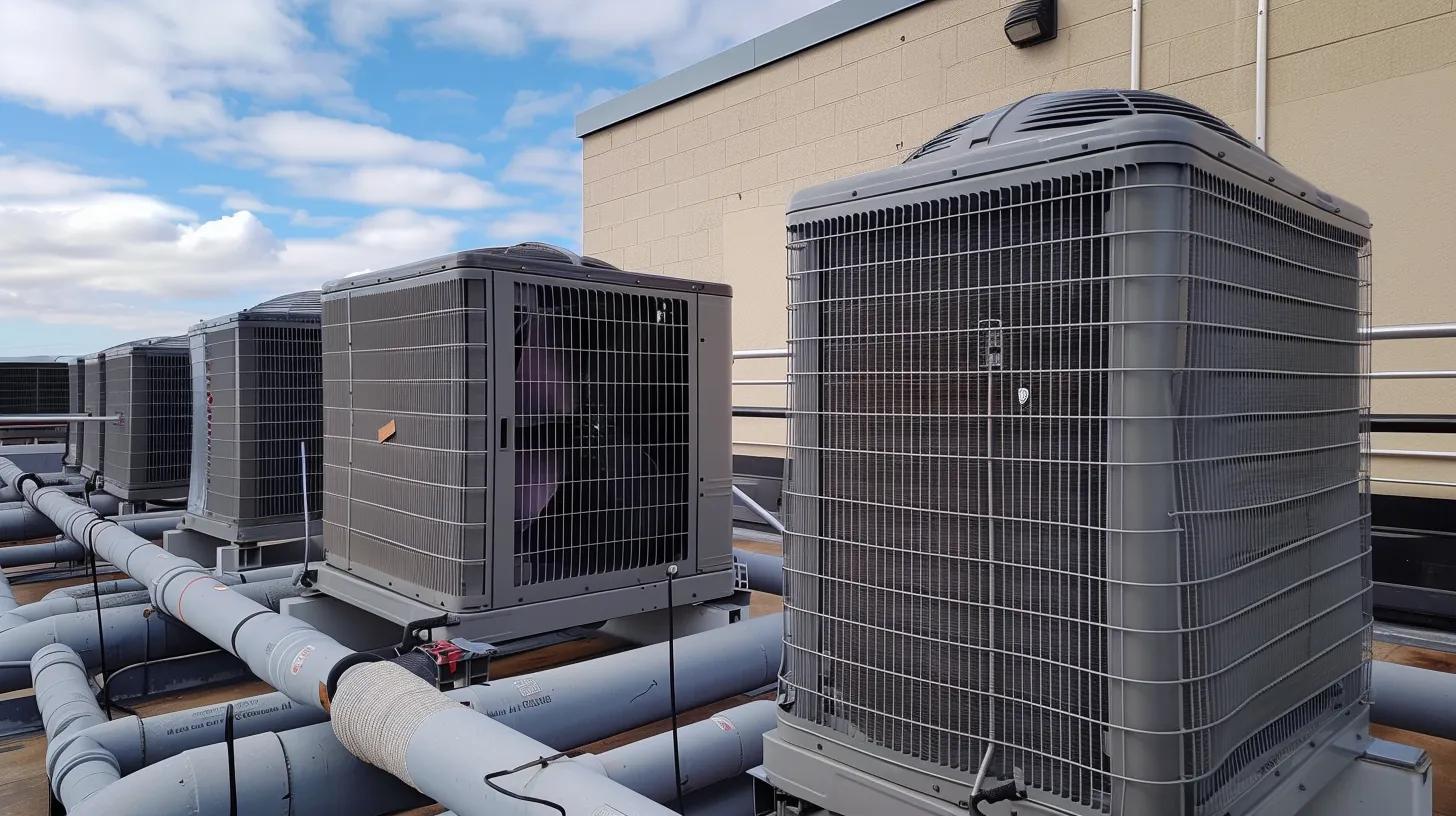
- Packaged unit: All components in one outdoor or rooftop cabinet — useful for small commercial sites or homes without indoor mechanical space.
- Ductless mini-split: Wall-mounted indoor units tied to an outdoor compressor — ideal for retrofits, additions, or zoned control without ducts.
- Air-source heat pump: Moves heat between inside and outside for heating and cooling — a strong choice for efficient, all-electric operation year-round.
- Ground-source (geothermal) heat pump: Uses the ground as a heat source/sink — very efficient over time but requires loop fields or drilling at installation.
- Gas furnace: Produces heat by combustion — dependable in very cold weather and where gas service is available.
These systems differ in installation complexity, footprint, and zoning ability. Those trade-offs are what you’ll weigh next when thinking about capacity and your building specifics.
Typical applications and rough capacity ranges for each system type:
| System Type | Typical Application | Heating Capacity (approx. BTU) | Cooling Capacity (approx. BTU) | Best For |
|---|---|---|---|---|
| Split system air conditioner | Homes with ducts | 40,000–120,000 | 36,000–120,000 | Central cooling with ducted distribution |
| Packaged unit | Small commercial/condos | 30,000–150,000 | 30,000–150,000 | Rooftop or tight outdoor sites |
| Ductless mini-split | Retrofits, additions | 6,000–36,000 (per head) | 6,000–36,000 (per head) | Zoned control without ducts |
| Air-source heat pump | Residential/commercial | 18,000–120,000 | 18,000–120,000 | All-electric heating + cooling |
| Geothermal (ground-source) | New builds, major retrofits | 36,000–240,000 | 36,000–240,000 | Highest long-term efficiency |
| Gas furnace | Cold-climate homes | 40,000–150,000 | N/A | Reliable heat in very low temps |
The table clarifies scale and best-use cases. Below we unpack the benefits of split, packaged, and ductless systems, then compare heat pumps and geothermal options to traditional furnaces so you can refine your choice.
What Are the Benefits and Features of Split, Packaged, and Ductless Mini-Split Systems?
Split systems separate indoor and outdoor components to let larger coils and duct distribution deliver steady whole-house comfort. They work well with forced-air accessories like filtration and humidifiers when ducts are correctly sized and sealed.
Packaged units put everything in one cabinet, saving indoor space but sometimes making access and service a bit trickier. Ductless mini-splits use inverter compressors and multiple indoor heads to create distinct zones — great for comfort in specific rooms and for avoiding the energy losses of old ductwork.
Installation and maintenance differ: split systems need duct planning and periodic sealing, packaged units need roof or pad access and attention to drainage, and mini-splits require careful indoor head placement and correct refrigerant charging. Knowing these trade-offs helps you decide between centralized ducted comfort or flexible zoned control based on your home and lifestyle.
How Do Heat Pumps and Geothermal HVAC Systems Compare to Traditional Furnaces?
Heat pumps move heat rather than create it, using the refrigerant cycle for both heating and cooling — that transfer process often gives higher seasonal efficiency than combustion furnaces. Modern air-source heat pumps, especially cold-climate models with variable-speed compressors, work well even in cooler areas and can reduce electric use compared with a separate furnace plus AC. Geothermal systems exchange heat with the ground, offering steady, high seasonal efficiency but requiring higher upfront work and cost for ground loops.
Furnaces burn fuel to make heat, supplying high-temperature air reliably in extreme cold — useful where gas is cheap or where existing ductwork is set up for high supply-air temps. Hybrid (dual-fuel) systems pair a heat pump with a furnace so the system can use the most efficient mode depending on outside temperature and energy prices. When choosing, weigh lifecycle operating costs, fuel availability, and site constraints. Next we’ll explain how correct sizing makes any chosen system perform as intended.
How Do You Determine the Right HVAC System Size for Your Home or Business?
Correct sizing starts with a building-specific load calculation that measures heating and cooling needs. Proper sizing improves comfort, efficiency, and equipment life. A professional Manual J load calculation considers square footage, insulation, windows, orientation, occupancy, and local climate to recommend BTUs or tons and distribution needs. An oversized unit will short-cycle and struggle with humidity control; an undersized unit will run constantly and still miss comfort targets — both waste energy and shorten equipment life.
Key factors that affect sizing are listed below, followed by a simple table showing how each input changes the calculation.
- Home size and layout (square footage, ceiling height) — changes the total air volume to be conditioned.
- Insulation levels and air sealing — directly reduce heating and cooling needs when improved.
- Window area, glazing, and solar orientation — can raise peak cooling loads on sunny exposures.
These inputs feed into Manual J to produce recommended capacity and to guide duct sizing and airflow. The next table maps attributes to their effect on load calculations.
| Sizing Factor | Attribute Measured | Example Effect on Load Calculation |
|---|---|---|
| Insulation level | Heat transfer through envelope | Poor insulation increases required BTU by 10–30% |
| Window area/orientation | Solar and conductive gains | South-facing large windows raise cooling peak |
| Ceiling height | Volume of conditioned air | Higher ceilings increase total load proportionally |
| Air leakage | Infiltration heat/cool loss | Drafty homes need higher capacity for peaks |
| Occupancy/appliances | Internal heat gains | High-occupancy spaces add to cooling load |
Understanding these factors prepares you for Manual J and helps prioritize envelope upgrades that can reduce required system size and cost. The next section explains Manual J in plain terms and why you should ask for it.
How Do Home Size, Insulation, and Climate Affect HVAC Sizing?
Square footage and ceiling height set the baseline air volume to condition, which determines the base BTU requirement. Better insulation and air sealing slow heat loss and gain, lowering required capacity and improving seasonal efficiency — sometimes enough to choose a smaller, less expensive system. Local climate shifts the balance between heating and cooling: in humid coastal zones, latent cooling (dehumidification) is an important part of the load, while colder inland areas raise the heating portion.
Example: a poorly insulated home built in the 1970s may need 15–30% more capacity than a modern, well-insulated house of the same size. A home with large, south-facing windows can have much higher cooling peaks unless shading is added. Because envelope improvements can reduce both equipment and energy costs, homeowners often see the best value by improving insulation or sealing before upsizing equipment. Accurate sizing that reflects these realities leads to better comfort and lower lifecycle costs.
What Makes an HVAC System Energy Efficient? Understanding SEER, AFUE, and HSPF Ratings

Efficiency is measured with standardized ratings: SEER and SEER2 for cooling, AFUE for combustion heating, and HSPF for heat pump heating. Higher numbers mean less energy used to deliver the same comfort, which lowers operating costs over the life of the equipment. Knowing what each rating measures and realistic “good” vs. “best” ranges helps you balance upfront price against long-term savings. This section defines each metric, gives a quick reference table, and shares practical tips for choosing equipment.
- SEER (Seasonal Energy Efficiency Ratio) — seasonal cooling efficiency; higher SEER uses less electricity per BTU of cooling.
- SEER2 — updated test procedures that reflect distribution and control losses; use SEER2 where manufacturers provide it for better field comparisons.
- AFUE (Annual Fuel Utilization Efficiency) — measures furnace combustion efficiency; higher AFUE means less fuel burned for the same heat.
- HSPF (Heating Seasonal Performance Factor) — seasonal heat pump heating efficiency; higher HSPF lowers electric heating costs.
These ratings help you weigh upfront cost against lifetime savings. The table below summarizes each metric in practical terms.
| Rating | What It Measures | Typical Range | What Higher Value Means | Practical Impact |
|---|---|---|---|---|
| SEER | Seasonal cooling efficiency | 13–26+ | Lower electricity per cooling BTU | Lower summer bills in AC-heavy homes |
| SEER2 | Updated seasonal cooling efficiency | Model dependent | More accurate field performance comparison | Better like-for-like model choices |
| AFUE | Furnace combustion efficiency | 78%–98% | More heat from the same fuel | Lower heating bills for gas/oil systems |
| HSPF | Heat pump seasonal heating efficiency | 7–12+ | Better electric heating performance | Important for all-electric homes in winter |
Understanding which ratings matter most for your site helps you prioritize equipment features. Next we’ll translate SEER/SEER2 and AFUE/HSPF into practical selection advice.
How to Compare Heat Pumps vs. Furnaces for Delaware and Eastern Shore Maryland Climates?
Delaware and the Eastern Shore have humid summers and generally mild winters with occasional cold snaps. That makes cooling and humidity control a priority, while rare cold stretches can test older heat pump models. Modern cold-climate heat pumps with variable-speed compressors deliver strong year-round efficiency and can often replace furnaces while handling summer cooling. Furnaces still outperform in extreme low temps and where gas service or high-temperature duct systems exist. Below are the main pros and cons for this region to help you choose.
- Heat pump advantages: Efficient all-electric heating and cooling, strong dehumidification, and eligibility for electrification incentives.
- Heat pump drawbacks: Older designs lose capacity in deep cold and may need backup heat during rare extremes.
- Furnace advantages: Reliable high-temperature heat; familiar and effective where natural gas is available.
- Furnace drawbacks: Requires a separate AC system, produces combustion emissions, and can be less aligned with decarbonization goals.
For many local homes, a dual-fuel system (heat pump plus furnace) offers a practical middle ground: the heat pump handles most of the year efficiently while the furnace kicks in for the coldest days.
What Are the Advantages and Drawbacks of Heat Pumps?
Heat pumps transfer heat efficiently for both heating and cooling, eliminating the need for separate furnace and AC systems in many cases. Modern inverter-driven models modulate capacity to match load, improving humidity control and reducing cycling losses that hurt comfort and efficiency. The main historical downside was reduced performance in extreme cold, but current cold-climate models and improved refrigerants have narrowed that gap. If you’re focused on lower operational emissions or electrification, heat pumps are an attractive option — especially when local rebates or programs help with installation costs.
Real-world performance depends on correct installation and system matching — proper ductwork, refrigerant charge, and controls are essential for a heat pump to deliver its efficiency advantages.
When Is a Furnace the Better Heating Option?
A furnace can be preferable when extreme low temperatures are common, when a property already has ducts sized for high supply-air temperatures, or when low-cost natural gas makes combustion heating economical. Furnaces deliver rapid warm-up and straightforward operation in very cold weather and can be easier to size without adding electric resistance. They’re also a lower-upfront-cost option compared with some heat pump or geothermal installs. Consider hybrid systems that combine a heat pump with a furnace if you want both seasonal efficiency and guaranteed low-temperature performance.
What Financing Options Does Air Doctorx Offer for HVAC System Purchases?
Air Doctorx Heating & Air Conditioning offers several financing paths to help customers afford new HVAC systems. We work with providers such as Synchrony Financing, Wells Fargo Financing, and Service Finance, each with different terms to match project size and credit profiles. Local programs and incentives, like Energize Delaware, can further reduce net cost or offer rebates for high-efficiency equipment. Membership plans add value through priority service and discounts. Talk financing with us during planning so you can weigh higher-efficiency equipment or envelope work against budget and expected savings.
Thinking about a replacement or upgrade? Schedule a sizing assessment and a financing consultation so we can review options, estimated operating savings, and incentives to find the most cost-effective plan for your property.
How Does Local Climate Knowledge Influence HVAC System Recommendations?
Climate matters. Delaware’s humid summers, coastal corrosion risk, and Eastern Shore Maryland’s variable winters change the equipment features we recommend — stronger dehumidification, corrosion-resistant components near the coast, and models sized to handle humidity as well as temperature. Installers familiar with local patterns recommend systems that handle both sensible and latent loads and select materials and placement that extend equipment life.
Working with a local installer reduces the chance of selecting equipment unsuited to your site and increases the likelihood of long-term satisfaction through climate-aware choices, correct installation, and knowledge of rebates and financing programs.
Air Doctorx Heating & Air Conditioning serves Delaware and Eastern Shore Maryland with installations, replacements, and maintenance for central HVAC, ductless systems, heat pumps, geothermal options, and furnaces. To discuss sizing, options, or financing, contact Air Doctorx at (302) 492-1333 or visit us at 4639 Halltown Rd. Suite B, Hartly, DE 19953 to schedule a consultation or sizing assessment.
Conclusion
Choosing the right HVAC system matters for comfort, energy bills, and long-term value. Understand the system types, get a proper Manual J sizing, and compare efficiency ratings so you can pick the solution that fits your home and budget. If you’d like help, our team is local and ready to walk you through options, incentives, and financing so you end up with a system that performs the way it should. Start with a sizing assessment and let us help you make the best choice for lasting comfort and savings.